


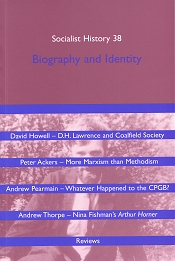
The theme of this journal 'Biography and Identity' links three articles which originated at a conference at Swansea Museum in May 2010, organised to commemorate Nina Fishman's life and work and to mark the publication of her two-volume Arthur Horner: A Political Biography.
David Howell's study of 'D. H. Lawrence and Coalfield Society' examines Lawrence's relationship with the mining areas and communities of Nottinghamshire, and explores how Lawrence's sense of identification with 'The District One Calls Home' is reflected in his writing. The schooldays of Hugh Clegg, one of the founders of Industrial Relations as an academic discipline, is the subject of Peter Ackers's article. This looks at Clegg's early writing, his identification with communism, as well as the intellectual atmosphere of Kingswood, a school for the sons of Methodist ministers which by the 1930s had become a remarkably enlightened institution. Andrew Thorpe looks at Nina Fishman's Arthur Horner in an extended review essay which discusses the wider issues of labour biography, and concludes with a tribute to Nina as a scholar and colleague.
In the fourth article, Andrew Pearmain surveys the final years and demise of the Communist Party of Great Britain. This sympathetic but highly critical study examines the miscalculations and illusions which led to the disippation of the party and the bizarre current position, in which its direct legal successor and owner of its remaining assets is a small lobbying group largely aligned to the Liberal Democrats.