


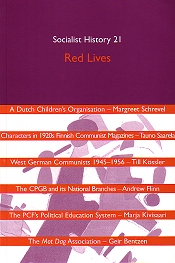
In recent years historians of communism have become increasingly interested in the sub- and counter-cultural aspects of the movement as well as its political significance. A number of articles on such themes have appeared previously in Socialist History and an overview of this scholarship on a Europe-wide scale is presented here.
Geographically, the articles take in Britain, France, the Netherlands, Germany, Norway and Finland. Thematically, they range from ethnic organisations and cadre formation to a communist `Scouts' movement, party families and the construction of exemplary lives in communist fiction. Chronologically, they span the entire history of communism, from the 1920s to the 1980s.
Touching on themes of gender, ethnicity, generation, local milieux and the role of intellectuals, the issues raised will interest not just historians of communism but all social historians.